
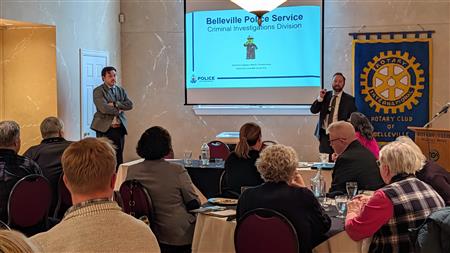
Detective Sergeant Martin Charbonneau and Detective Constable Devan Aris were pleased to share up-to-date information and awareness to the Rotary Club of Belleville on latest fraud trends and scams and how best to avoid becoming a victim of fraud. Both are members of the Belleville Police Service, assigned to the Criminal Investigation Division, responsible for major crimes from homicides to complex frauds.
Latest fraud trends include home repair scams, grandparent/emergency scams, gift card scams, identity theft, romance scams, crypto investment scams and bank investigator scams. Always recommended is to ask for identification and verify the company before allowing anyone to do home repair work such as roofing or paving of your driveway. Get multiple quotes and consult trusted friends and family. Avoid paying money upfront and don't rush to make a decision, always do your homework and never leave unknown workers alone in your home. Grandparent scams come across as emergent in nature and scammers impersonate a grandchild, loved one, lawyer or police officer and claim urgent bail or fine payments are required to get the person out of hot water so to speak. The scammers may request cash via courier or mailing. Please note that Canada does not use a cash-bail system and the goal of the scammer is to create panic and urgency. Don't be fooled. Have a code name that only trusted family members would use to identify themselves. Gift card scams involve asking victims to pay using gift cards and once they have photos of the cards, they drain the balance instantly. Never pay or accept payment via gift cards. Identity theft occurs when personal information is stolen and used to impersonate victims for financial gain. Protect your sensitive information by shredding personal documents. Victims can contact Equifax or TransUnion for credit protection services. Fraudsters are professionals convincing people to cash counterfeit cheques or money orders, they may even compromise a person's familiar social-media contacts. If something feels off, trust your instincts. Romance scams may sound attractive to start off, but a person should be wary of people they meet on the internet. Do not send money to someone you have met online, thinking you have made a positive, emotional connection, If you receive a telephone call from someone posing as a bank employee or investigator, claiming your account is compromised, always hang up and call the number on the back of your bank card to verify if a fraud has occurred.
If you find yourself a victim of fraud, report the incident to your local police service and to the Canadian Anti-Fraud Center. Notify your bank immediately and contact Equifax or TransUnion to place alerts or protection on your credit.
Rotarian Graham Whitehead, a retired police officer, thanked Martin and Devan for their very informative presentation. No doubt about it, police investigations into frauds has changed significantly over the past few years. We must all be smart and alert.